
The first AI cost report I usually see is a monthly number: model spend went up 37 percent. It is precise enough to alarm finance and too vague to help engineering.
Which tenant caused the increase? Which workflow became more expensive? Did the extra spend buy better outcomes, or did a retry loop quietly consume the budget? Was the change caused by a larger context, a new model, a tool failure, a prompt expansion, a cache miss, or a pricing update?
A monthly total cannot answer those questions. An AI agent is not one API call with one owner. It is a workflow that may route between models, retrieve context, call tools, retry after a timeout, ask for clarification, wait for a human, and produce an outcome whose business value is very different from the cost of the tokens used to reach it.
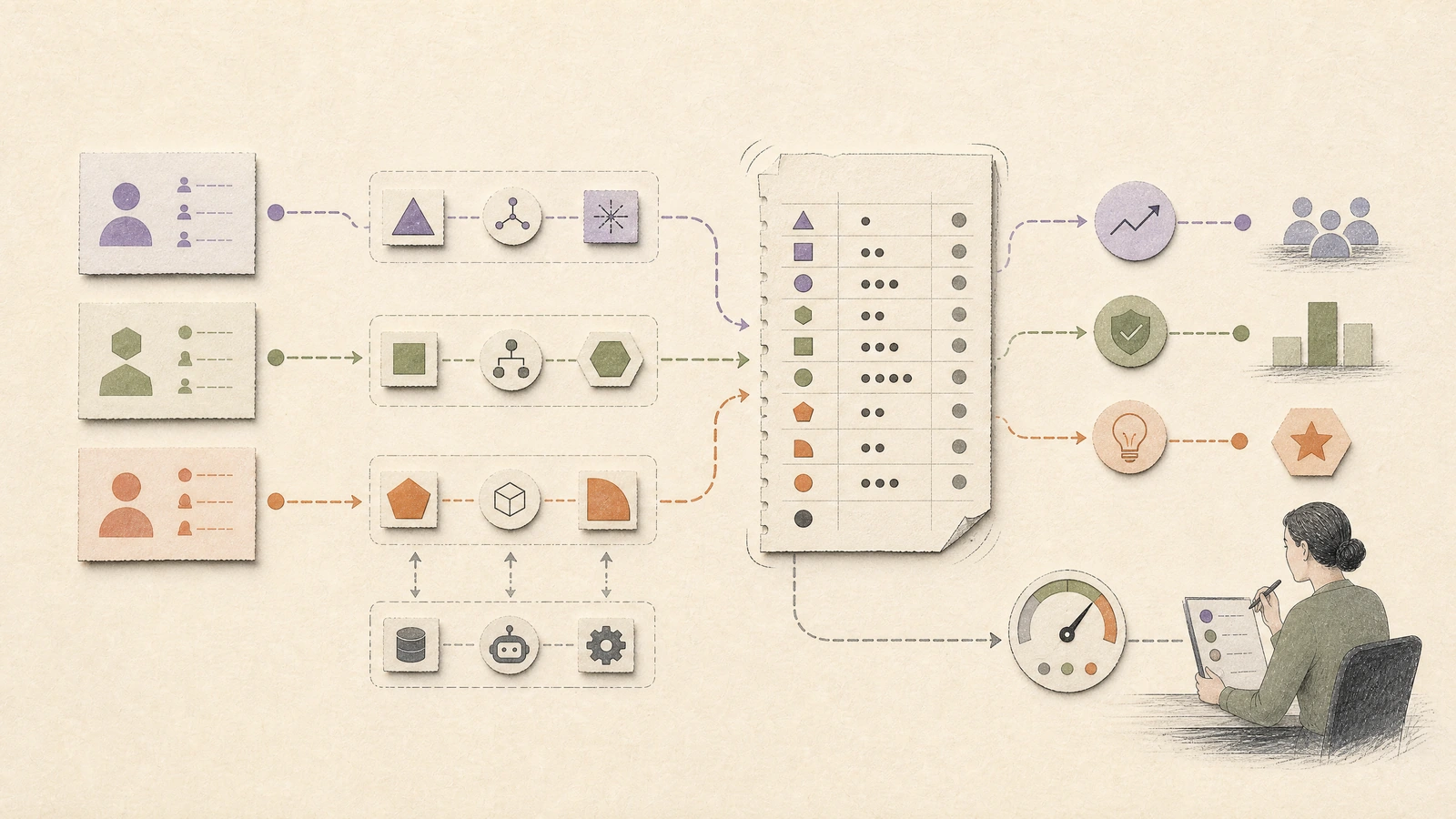
The thesis: AI FinOps becomes useful when cost is allocated to the same dimensions by which the business manages work: tenant, workflow, outcome, and owner. Token usage is the meter, but accountable unit economics is the product.
The FinOps Foundation’s overview of FinOps for AI describes both continuity and change. The basic Price × Quantity = Cost equation still applies, but AI introduces volatile pricing, new SKUs, token meters, GPU scarcity, limited native tagging, and an ongoing quality dimension. This article turns those principles into an application-level design for agent teams.
AI spend is a workflow, not a line item
A conventional service may expose a reasonably direct relationship between request count and cost. An agent workflow breaks that relationship.
One user request might produce the following trace:
request received
  -> intent classification
  -> model routing
  -> retrieval query x 3
  -> context compression
  -> planner call
  -> tool call: CRM lookup
  -> tool call: ticket update
  -> timeout
  -> retry
  -> human approval wait
  -> final response
Each stage can have a different meter. Some stages use input tokens, output tokens, cached tokens, embedding requests, reranking, GPU seconds, or external SaaS calls. Some are shared by many tenants. Some are caused by a workflow failure rather than by useful work.
If the accounting boundary is only the final model request, the system undercounts the real cost and assigns it to the wrong owner. If the boundary is only the monthly provider invoice, the team cannot optimize a workflow.
The first design decision is therefore to define the cost-bearing unit. For an agent platform, that unit is usually not “one token.” It is closer to:
one completed workflow outcome
= model usage
+ retrieval and context work
+ tool execution
+ orchestration overhead
+ shared platform allocation
+ failure and retry cost
The cost-bearing unit can be refined by product. A support platform may track cost per resolved ticket. A document pipeline may track cost per accepted document. A coding agent may track cost per merged change, review cycle, or reverted patch.
Start with an allocation key
Every workflow run needs an application-owned allocation key before it makes the first model call. The key should be stable across retries and model hops, but it should not contain sensitive data.
CostContext {
  cost_trace_id: string
  tenant_id: string
  workspace_id: string
  product_id: string
  workflow_id: string
  workflow_version: string
  outcome_id: string
  actor_scope: string
  cost_center: string
  environment: dev | staging | production
  budget_policy: string
  started_at: timestamp
}
The context is not merely a logging convenience. It is the join key that connects provider usage, tool work, platform overhead, budgets, and business outcomes. Without it, allocation becomes a periodic guess based on invoice categories.
Keep the context separate from the prompt. A tenant identifier may be required for accounting and access control, but it should not be copied into model input unless the task needs it. Cost attribution must not become a new route for exposing customer data.
The key should also survive internal model routing. If a router moves a workflow from one provider to another, the cost trace remains the same while the provider attempt receives a child span.
Build a cost ledger, not a dashboard-only metric
A dashboard can show totals. A ledger can explain them. Store an immutable or append-only cost event for every billable or allocable unit.

CostEvent {
  event_id: string
  cost_trace_id: string
  tenant_id: string
  workflow_id: string
  outcome_id: string | null
  provider: string
  model_or_service: string
  meter_type: input_tokens | output_tokens | cached_tokens |
               embeddings | rerank | gpu_seconds | tool_call |
               storage | human_review | shared_overhead
  quantity: decimal
  unit: string
  unit_price: decimal
  amount: decimal
  currency: string
  allocation_method: direct | proportional | fixed | usage_weighted
  occurred_at: timestamp
  pricing_version: string
}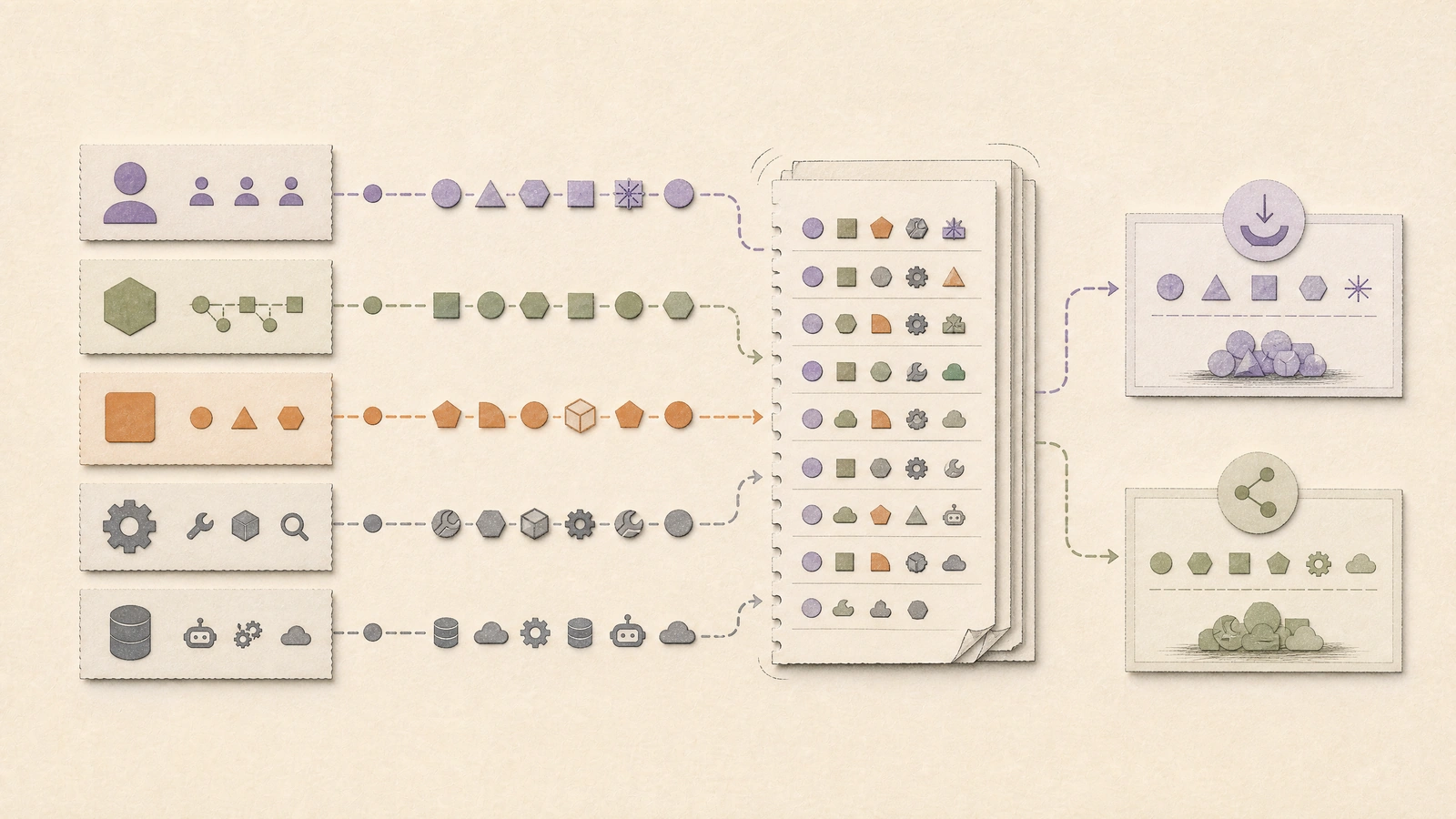
A ledger event should preserve the quantity and price version used to calculate the amount. Provider pricing can change. A historical report should remain reproducible even after the provider publishes a new rate card.
Do not overwrite an estimate when an invoice arrives. Record an adjustment event that points to the original estimate. This makes the system capable of explaining why yesterday’s cost changed without pretending that the first number was exact.
The ledger can be projected into a reporting table, but the reporting table should not be the only source of truth. Cost attribution is an accounting problem with late-arriving data, corrections, and shared resources.
Allocate at three useful levels
The requested dimensions—tenant, workflow, and outcome—answer different management questions. They should not be collapsed into one label.
| Dimension | Owner question | Typical decision |
|---|---|---|
| Tenant | Who consumed the capacity and who owns the budget? | Showback, chargeback, quota, contract, or account review. |
| Workflow | Which product path creates cost and where is the waste? | Prompt, routing, retrieval, retry, or architecture optimization. |
| Outcome | Did the spend produce useful work? | Unit economics, quality threshold, and value-based investment. |
| Model/service | Which provider or SKU is expensive or effective? | Rate negotiation, placement, routing, and commitment decision. |
| Environment | Is the spend production, experimentation, or platform overhead? | Separate product economics from R&D and shared operations. |
A tenant report without workflow detail creates blame without a fix. A workflow report without tenant detail hides who needs a budget conversation. An outcome report without the raw usage trace makes quality-adjusted cost impossible to audit.
Use a hierarchy rather than a single flat tag:
tenant:acme
  -> product:support-agent
      -> workflow:refund-review
          -> outcome:refund-approved
              -> trace:tr_01
                  -> model_call:mc_01
                  -> tool_call:tc_07
The hierarchy lets finance ask “who paid?” while engineering asks “what path should we change?”
Separate direct cost from shared cost
Not every AI expense can be assigned directly. A model call belongs to one workflow. A shared retrieval index, gateway, observability stack, reserved GPU pool, or platform team does not.
Choose an allocation method deliberately and disclose it.
| Cost category | Preferred allocation method | Warning |
|---|---|---|
| Model input/output tokens | Direct usage by trace, workflow, and tenant. | Keep input, output, cached, and reasoning meters separate when available. |
| Tool API call | Direct usage, with provider invoice reconciliation. | Include failed calls if they consumed capacity or money. |
| Shared retrieval index | Usage-weighted by queries, storage, or indexed volume. | Do not allocate only to the largest tenant by default. |
| Gateway and orchestration | Proportional to requests, duration, or compute. | Make the denominator visible. |
| Reserved GPU capacity | Fixed baseline plus usage-weighted variable share. | Avoid charging experimental idle capacity as product consumption. |
| Human review | Direct to workflow/outcome when triggered by a run. | Distinguish required review from avoidable escalation. |
| Platform engineering | Fixed shared allocation or separate platform cost center. | Do not hide engineering investment inside token price. |
There is no universally correct allocation key. The goal is a method that is explainable, stable enough for decisions, and capable of improving as measurement quality increases.
When no fair allocation is possible, mark the cost as shared rather than inventing false precision. A transparent “shared platform overhead” line is more useful than a tenant invoice with an unexplained 18.7 percent surcharge.
Usage meters are not interchangeable
Token accounting is more complicated than counting characters in the user prompt. The billed input may differ from the visible input after templating, retrieval, compression, tool schema expansion, or provider-side processing. The FinOps Foundation notes that AI services can expose different token meters and that user input is not always the same quantity that reaches the billed endpoint.
Record the meters separately when the provider exposes them.
input_tokens_user
input_tokens_system
input_tokens_retrieved
input_tokens_tool_schema
input_tokens_cached
input_tokens_billed
output_tokens_visible
output_tokens_reasoning_or_hidden
provider_adjustment
Do not invent a hidden-token measurement if the provider does not expose it. Store an unknown or provider-reported aggregate value and keep the uncertainty explicit.
The same rule applies to tool cost. A tool call that returns an empty result may still consume a paid API request. A failed request may still create a bill. A retry may be operationally necessary but must remain visible as retry cost rather than being blended into “successful work.”
Cost of failure is part of the product economics
An agent can be cheap when it succeeds and expensive when it loops. This is why average cost per request is a poor optimization target.
Track at least four cost paths:
productive_cost
  = usage that contributed to an accepted outcome

recovery_cost
  = retries, fallback models, reconciliation, and extra retrieval

avoidable_cost
  = loops, duplicate calls, cache misses, oversized prompts, and invalid tool attempts

shared_cost
  = infrastructure and operations allocated across workloads
The categories are not always perfectly observable. That is acceptable if the classification rule is documented and improved over time. The important thing is to stop treating every token as equally valuable.
A workflow that spends $0.04 and resolves a high-value issue may be healthier than one that spends $0.01 and produces a useless answer. Cost must be joined to outcome quality rather than optimized in isolation.
Define outcome-aware unit economics
A useful unit metric has a denominator that represents completed value, not just traffic.
cost_per_accepted_outcome =
  total_allocated_cost / number_of_accepted_outcomes

quality_adjusted_cost =
  total_allocated_cost /
  (accepted_outcomes * quality_score)

cost_of_failure =
  retry_cost + fallback_cost + human_cost + downstream_repair_cost
The quality score needs an explicit contract. It might be a verified state transition, a human-accepted resolution, a test-passing code change, or a document that passes required checks. Do not use a model’s final “looks good” sentence as the only proof of outcome.
The existing AI Agent SLO framework treats cost as one of several operational dimensions alongside success, latency, and safety. FinOps complements that framework by answering a different question: who owns the cost, what work created it, and what business unit of value did it produce? An SLO can tell you that a workflow exceeded its cost budget; FinOps can explain why and allocate the impact.
The allocation ledger in practice
Suppose a tenant runs a refund-review workflow. The trace makes two planner calls, one retrieval query, one CRM lookup, one payment-provider lookup, and a human approval. The first payment lookup times out and is retried.
The ledger might look like this:
| Event | Meter | Direct amount | Allocation | Outcome relation |
|---|---|---|---|---|
| Planner call 1 | Input/output tokens | $0.006 | Direct to tenant/workflow | Productive candidate work |
| Retrieval | Embedding/rerank/query | $0.002 | Direct to workflow | Evidence for decision |
| CRM lookup | Tool request | $0.001 | Direct to workflow | Evidence |
| Payment lookup 1 | Tool request | $0.003 | Direct to workflow | Recovery/failure path |
| Payment lookup retry | Tool request | $0.003 | Direct to workflow | Recovery cost |
| Planner call 2 | Input/output tokens | $0.005 | Direct to workflow | Reconciliation |
| Human approval | Review minutes | $0.018 | Direct to outcome | Required gate |
| Gateway overhead | Compute/time | $0.002 | Proportional | Shared platform |
| Total | $0.040 | Accepted refund decision |
The important insight is not the exact amount. It is the shape of the answer. The workflow can now see that the retry path cost 15 percent of the run, the human gate cost more than the planner, and the final outcome was accepted. A model migration that saves 20 percent on planner tokens may be less valuable than fixing the timeout that creates duplicate lookup cost.
Budget envelopes need to exist at runtime
A monthly budget reviewed after the invoice is not a control. An agent needs a budget envelope that can influence behavior during the run.
BudgetEnvelope {
  tenant_limit: money
  workflow_limit: money
  run_limit: money
  token_limit: integer
  tool_call_limit: integer
  human_review_limit: money
  soft_threshold: number
  hard_threshold: number
  fallback_policy: string
  created_at: timestamp
  expires_at: timestamp
}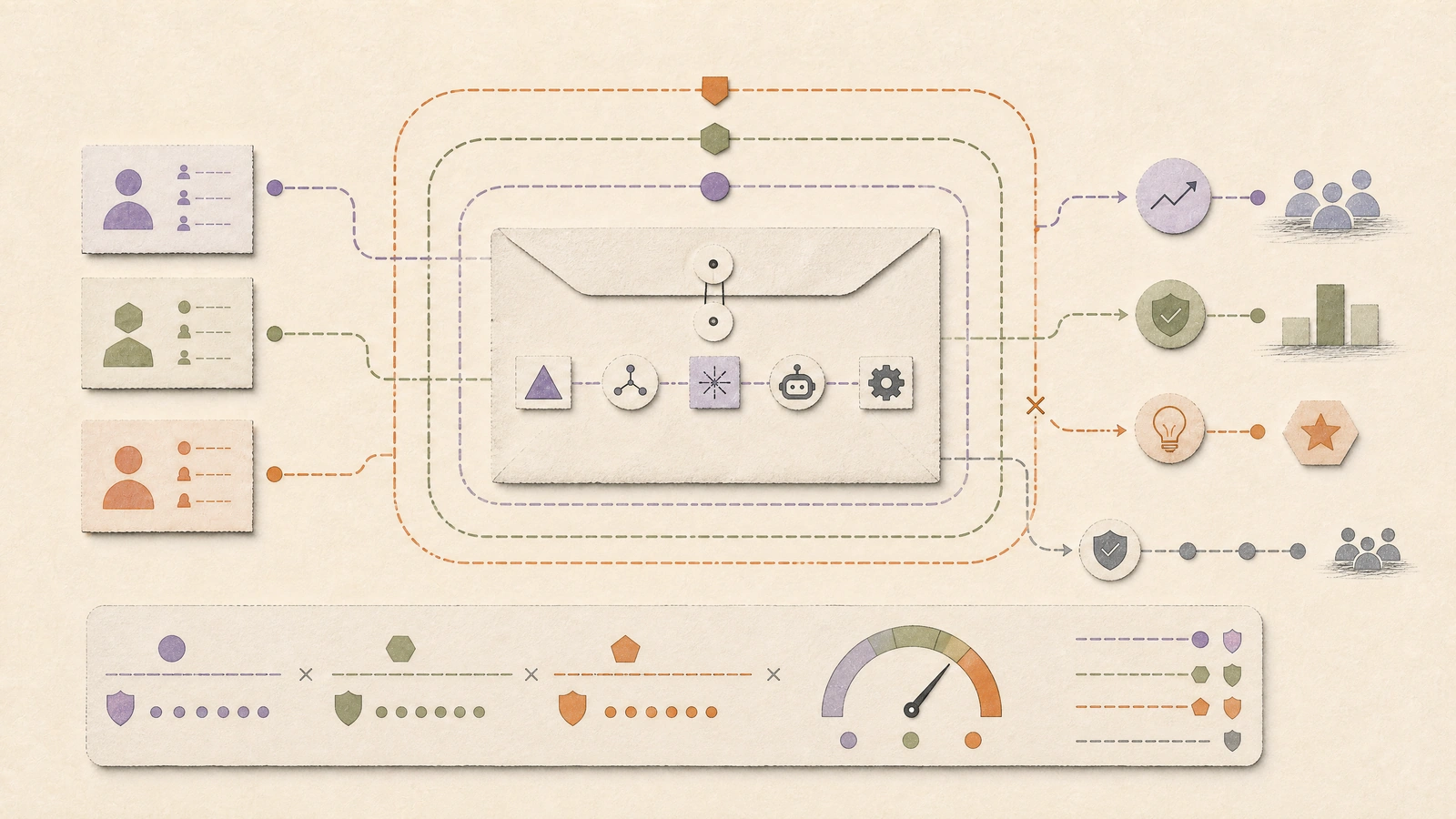
The envelope can trigger actions at different thresholds.
| Threshold | Example behavior |
|---|---|
| 70 percent | Prefer cached context, shorter retrieval, or a smaller model for low-risk steps. |
| 85 percent | Stop optional enrichment, reduce fan-out, and ask for confirmation before expensive work. |
| 100 percent | Block nonessential calls, return a pending state, or escalate to an owner. |
| Exception | Permit an overage when the workflow is high value, policy-approved, and recorded. |
Budget enforcement should understand risk. A support summary can degrade to a cheaper model. A safety review should not silently downgrade because the token budget is nearly exhausted. The budget policy must say which steps are optional, which are protected, and which require a human decision.
Showback before chargeback
Showback reports consumption to the owner without directly moving money. Chargeback attaches the allocation to a financial responsibility or contract. Many teams should start with showback.
Showback reveals whether the taxonomy is understandable and whether owners can act on the data. If a product team cannot reproduce its workflow total, a chargeback invoice will only create a dispute.
A useful report includes:
tenant
  spend
  runs
  accepted_outcomes
  cost_per_accepted_outcome
  retry_share
  cache_hit_rate
  top_workflows
  budget_breaches
  shared_cost_allocated
  confidence_and_data_completeness
The last field matters. A report with 100 percent allocation coverage is not necessarily trustworthy if half the usage was allocated by a crude proportional rule. Track data completeness and allocation confidence next to the number.
Chargeback also needs a dispute process. A tenant should be able to ask which traces created a cost, which pricing version was applied, and which shared-cost rule was used. That does not mean exposing prompts or customer data. It means exposing a privacy-safe cost explanation.
Optimize the right layer first
AI cost optimization is not one model swap. It is a sequence of decisions across the workflow.

Remove work that should not happen
Fix duplicate requests, invalid tool calls, retry storms, excessive context, unnecessary retrieval, and loops that continue after the outcome is already known. The cheapest token is the token never sent.
Improve the request shape
Use structured context, stable system instructions, selective retrieval, and tool schemas that do not repeat irrelevant detail. Compression can reduce input quantity, but it must be evaluated for quality loss and rework cost.
Route by risk and task
A smaller model may be enough for classification, formatting, extraction, or a deterministic follow-up. A stronger model may be justified for ambiguous high-value reasoning. The router needs a quality floor, not only a price table.
Increase cache value safely
Semantic caching can save cost when freshness and authorization allow reuse. Cache keys must include the dimensions that change meaning: tenant scope, policy version, retrieval cutoff, workflow version, and relevant input fingerprint.
Reduce fan-out and control concurrency
Parallel agent calls can lower latency while raising cost and correlated-error risk. Set a maximum fan-out and measure whether the additional opinions improve accepted outcomes.
Optimize placement and commitment
For predictable workloads, reserved capacity or better workload placement can reduce rate. For volatile workloads, flexibility may be worth more than a discount. The decision belongs in the same ledger as usage and outcome value.
Do not optimize quality away
A cheaper run is not automatically a better run. Compare alternatives on a frontier that includes cost, latency, quality, safety, and accepted outcome rate.
candidate_is_better_if:
  cost_per_accepted_outcome decreases
  AND quality_floor remains satisfied
  AND safety_constraints remain satisfied
  AND latency_budget remains satisfied
If a smaller model reduces token spend but doubles human review or downstream repair, the apparent saving is false. If compression saves input tokens but causes the agent to retrieve the same evidence again, the system may have moved cost rather than removed it.
Keep optimization experiments tied to a workflow version. Otherwise a price change, prompt change, and model change can appear as one blended improvement that nobody can reproduce.
Data quality and privacy boundaries
Cost observability can accidentally collect more sensitive data than the original application. Prompts may contain customer identifiers, financial details, code, or private documents. The FinOps ledger should not require raw prompt storage.
Prefer the following controls:
| Control | Purpose |
|---|---|
| Stable opaque trace ID | Join events without embedding customer data in tags. |
| Hashed or tokenized tenant reference | Preserve allocation while limiting exposure. |
| Meter-only provider record | Store usage and price facts without prompt content. |
| Restricted outcome taxonomy | Report value categories without leaking case details. |
| Retention policy | Remove detailed traces while preserving aggregated accounting. |
| Access separation | Let finance see cost and owners see workflow evidence without universal prompt access. |
| Pricing version | Reconcile history without copying provider secrets or credentials. |
Data minimization is especially important when chargeback creates a broad audience for cost reports. The owner needs to understand the bill, not read every customer conversation that generated it.
A rollout plan for AI Agent FinOps
Start with one workflow that has a clear owner, a repeatable outcome, and enough volume to expose cost variation. Define the cost context and record model usage, tool calls, retries, and outcome status.
Next reconcile trace-level estimates with the provider invoice. Measure the gap. A gap is not automatically a defect: some providers expose delayed adjustments, rounding, cached meters, or aggregated charges. Document the reconciliation rule.
Then add tenant and workflow showback. Give owners enough detail to identify one optimization action. Do not launch chargeback before the taxonomy, allocation rules, and dispute process are trusted.
After that, introduce runtime budget envelopes for low-risk controls: optional retrieval, model fallback, fan-out, and retry. Keep safety-critical work protected from silent degradation.
Finally, add outcome economics. Measure cost per accepted result, failure recovery cost, human review cost, and quality floor by workflow version. Use the data to decide whether to optimize prompts, routing, retrieval, tools, capacity, or product expectations.
Rules to carry into production
Do not ask “How much did the model cost?” Ask “What work did this workflow create, who owns it, what part was shared, and did the spend produce an accepted outcome?”
Treat every agent run as a traceable economic unit. Give it a stable allocation context before the first call. Record usage as a ledger rather than only a dashboard total. Keep direct and shared cost separate. Preserve price versions and late adjustments. Enforce budgets at runtime. Compare cost to outcome quality. Expose enough detail for showback without turning finance into a new prompt-access system.
FinOps for AI is not a monthly exercise in making the model bill look smaller. It is the operating discipline that connects engineering choices to product value, tenant responsibility, and sustainable agent behavior.
Read next in the production AI series
For workflow-level success, latency, cost, and safety targets, read Designing SLOs for AI Agents. For safe retries after a budget-approved action, read Idempotent AI Actions: Making Tool Calls Safe to Retry. For provider selection and failover, continue with Provider Rotation for Multi-Model Failover.
Comments (0)